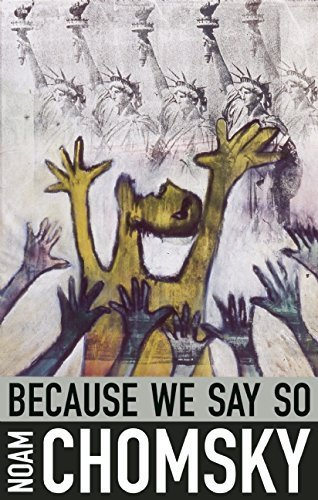
In his book Because We Say So, the renowned American Jewish intellectual Noam Chomsky recounts his one time experiences in Gaza:
“An old man in Gaza held a placard that read: ‘You take my water, burn my olive trees, destroy my house, take my job, steal my land, imprison my father, kill my mother, bombard my country, starve us all, humiliate us all, but I am to blame: I shot a rocket back.’”
Exploring how Jewish dissent against Zionism aligns with the Palestinian struggle for liberation, arguing that unity in a shared struggle against Zionism offers a quicker path to peace than narrow nationalist liberation.
There is quite a remarkable phenomenon, which though it is in plain sight, goes almost unnoticed. It may occasionally receive a little airtime if the event is big enough and the times momentous, as they are at present. Most of the time, however, to the vast majority of people, and in particular those who can effect change, this phenomenon is either invisible or ignored. I am referring, of course, to Jewish support of Palestinians, as well as Jewish resistance to Zionism and to Israel in its current guise as Zionist creation.
Moreover, even in times when this phenomenon of Jewish resistance to Zionist supremacism in support of Palestinians receives attention, it is as a fleeting curiosity to the point of dismissiveness. While the big media networks such as the BBC and CCN give generous airtime to Israeli politicians and army spokespersons, as well as those who defend a Zionist, apartheid Israel, other than a brief clip of Jews occupying the Washington Capitol or Grand Central Station, little to no air time is given to anti-Zionist Jews in interviews and analysis to meaningfully present their stance.
Gabor Maté: one of many esteemed Jewish Israeli voices speaking on Zionism and the Israeli-Palestinian conflict.
It is a question by itself as to why anti-Zionist Jews – that is, Jews who stand against the destructive and divisive ideology of Zionism – are side-lined in the general debate. Though it is not a difficult question to answer as it happens. Suffice to say that it is because anti-Zionist Jews, by their mere existence, expose the falsity that Zionism is synonymous with Judaism and with being Jewish, and that it stands for all Jews everywhere, in defence of Jewish identity and for their protection as a people.
That brings us to another question: why are there anti-Zionist Jews to begin with? This too is not difficult to answer. First, Jews have a long history of countering injustice wherever it may manifest. Second, Jews who stand against Zionism recognise that Zionism is their enemy also. These points are profoundly addressed by Jewish Voice for Peace (JVP), and it is worthwhile quoting their stance to get a full appreciation:
“Jewish Voice for Peace is guided by a vision of justice, equality and freedom for all people. We unequivocally oppose Zionism because it is counter to those ideals.
We know that opposing Zionism, or even discussing it, can be painful, can strike at the deepest trauma and greatest fears of many of us. Zionism is a nineteenth-century political ideology that emerged in a moment where Jews were defined as irrevocably outside of a Christian Europe. European antisemitism threatened and ended millions of Jewish lives — in pogroms, in exile, and in the Holocaust.
Through study and action, through deep relationship with Palestinians fighting for their own liberation, and through our own understanding of Jewish safety and self-determination, we have come to see that Zionism was a false and failed answer to the desperately real question many of our ancestors faced of how to protect Jewish lives from murderous antisemitism in Europe.
While it had many strains historically, the Zionism that took hold and stands today is a settler-colonial movement, establishing an apartheid state where Jews have more rights than others. Our own history teaches us how dangerous this can be.
Palestinian dispossession and occupation are by design. Zionism has meant profound trauma for generations, systematically separating Palestinians from their homes, land, and each other. Zionism, in practice, has resulted in massacres of Palestinian people, ancient villages and olive groves destroyed, families who live just a mile away from each other separated by checkpoints and walls, and children holding onto the keys of the homes from which their grandparents were forcibly exiled.
Because the founding of the state of Israel was based on the idea of a “land without people,” Palestinian existence itself is resistance. We are all the more humbled by the vibrance, resilience, and steadfastness of Palestinian life, culture, and organizing, as it is a deep refusal of a political ideology founded on erasure.
In sharing our stories with one another, we see the ways Zionism has also harmed Jewish people. Many of us have learned from Zionism to treat our neighbors with suspicion, to forget the ways Jews built home and community wherever we found ourselves to be. Jewish people have had long and integrated histories in the Arab world and North Africa, living among and sharing community, language and custom with Muslims and Christians for thousands of years.
By creating a racist hierarchy with European Jews at the top, Zionism erased those histories and destroyed those communities and relationships. In Israel, Jewish people of color – from the Arab world, North Africa, and East Africa – have long been subjected to systemic discrimination and violence by the Israeli government. That hierarchy also creates Jewish spaces where Jews of color are marginalized, our identities and commitments questioned & interrogated, and our experiences invalidated. It prevents us from seeing each other — fellow Jews and other fellow human beings — in our full humanity.
Zionist interpretations of history taught us that Jewish people are alone, that to remedy the harms of antisemitism we must think of ourselves as always under attack and that we cannot trust others. It teaches us fear, and that the best response to fear is a bigger gun, a taller wall, a more humiliating checkpoint.
Rather than accept the inevitability of occupation and dispossession, we choose a different path. We learn from the anti-Zionist Jews who came before us, and know that as long as Zionism has existed, so has Jewish dissent to it. Especially as we face the violent antisemitism fueled by white nationalism in the United States today, we choose solidarity. We choose collective liberation. We choose a future where everyone, including Palestinians and Jewish Israelis, can live their lives freely in vibrant, safe, equitable communities, with basic human needs fulfilled.”
Though it will sound very strange to some ears, the really salient note here is “collective liberation”. Currently, the Palestinian struggle is seen worldwide as a struggle solely for liberation of Palestinians, their land and their rights. However, this narrow view is not only a hindrance to justice, it is also mistaken, because it excludes the other party to the injustices of Zionism. As anti-Zionist Jews have recognised for over a century, aside from the injustice wrought on Palestinians, Jews have also been robbed by Zionism of a greater and richer existence in the region, more than anything the supremacism of Zionism can ever offer Jews. To quote again from the JVP: “Jewish people have had long and integrated histories in the Arab world and North Africa, living among and sharing community, language and custom with Muslims and Christians for thousands of years.”
Jewish Israeli scholar Avi Shlaim speaking on the forgotten history of Arab Jews
Zionism has destroyed that world, and in its place created a country and imposed itself on a region in which Jews, rather than feeling safe and at home, must always live in fear, where they must perpetually live by the principle “that the best response to fear is a bigger gun, a taller wall, a more humiliating checkpoint”. It is small wonder that Jews who know the historical truth about themselves as a people so strongly resist Zionism.
But there is not only the loss to Jews of a rich heritage in the wider region, there is also the moral compromise forced upon Jews who do not reject Zionism. Zionism is un-Jewish, and indeed it is anti-Jewish in the most virulent sense. To quote the great Jewish sage Hillel, when asked to teach the Torah to a potential convert whilst he stood on one foot, Hillel replied: “Do not do to others that which is hateful to you. That is Judaism. All the rest is commentary.” And, we might add, that is humanism.
Jews who do not reject Zionism are no different to Muslims who do not reject Islamism, or white people who do not reject White Supremacists who claim to be standing in their name. All supremacist ideologies and systems, whether Slavery, Fascism, Nazism, White Supremacism, Islamism or Zionism, require the violation of humanist principles to achieve their goals, and in turn morally compromise not only those who actively perpetuate these ideologies, but also those who fail to reject them whilst accepting the benefits. As a supremacist ideology like any other, Zionism’s violation of humanist principles through its possession of the land for one group via the erasure of another, has not only harmed Palestinians, it also inflicts a deep moral wound on all Jews who fail to denounce it.
A great Jewish sage of our time foresaw the moral injury Zionism would inflict on Jews. Speaking in the 1930s, Albert Einstein warned of the “inner damage to Judaism from the creation of a Jewish state with boarders and an army”.[1] And in 1956, eight years after Israel’s imposition in Palestine, and observing how Israel’s policies towards the Arabs were already developing, Einstein wrote to the Jewish Agency warning that “…the attitude we adopt toward the Arab minority will provide the real test of our moral standards as a people.”
Einstein understood that Zionism would force Jews to go against Judaism’s deepest held precept as stated so clearly by Hillel. Zionism’s violation of this ethical core of Judaism, which is a universal to the whole of humanity, injures everyone who sees themselves as a Jew, indeed more broadly as a humanist, yet does not stand against Zionism and all forms of supremacism.
Keeping the discussion focused on Palestine, it is inescapable that those Jews who do not reject Zionism currently do not live as humanists but as oppressors. They do not live as Hillel exhorts the potential convert to Judaism to live. There is no way round this conclusion, and cannot be said in any other way. Jews who do not reject Zionism cannot be exempted from the same criticism that Muslims or Christians are rightly subject to when they fail to stand against the prejudices and supremacisms of their creed, whether it is homophobia, misogyny, religious hatred and so on. In every sense, failure to denounce is tantamount to support.
Liberating Palestine Is Not Enough
It is important to note that the inner damage inflicted on Jews as a collective by Zionism will not be healed with the liberation of Palestinians alone. To fully heal that spiritual wound and recover those moral standards, which Einstein foresaw would be sacrificed on the alter of Zionism, Jews must be part of the liberation process, both as liberators and as those to be liberated. Because, and though it will surprise and perhaps even shock many, the majority of Jews are as much victims of Zionism as Palestinians.
This all now raises a third question: is it time to unify the struggle in recognition that there is more than one party who is victim to Zionism? To unify and redefine the struggle from being solely a liberation of Palestinians to being a struggle to defeat Zionism and consign it to history? Because it is clear that as long as Zionism continues to claim it speaks for all Jews, Jews as a collective can neither regain the former moral high ground of centuries of humanist existence nor be effective in liberating Palestinians. It is not enough to restore Palestine. Zionism must end.
It is surely in realisation of a joint struggle that peace and justice for all have their best and possibly only chance of being realised. We need to advancing beyond a struggle with the solitary goal of liberation of Palestine, to one of a joint struggle against the divisive ideology of Zionism and its harm to all of us. A struggle that advocates not only for a restoration of Palestine, but, as JVP and other Jewish and Palestinian groups advocate, for the creation of the state that should have at one time been created for both Jews and Palestinians, not simply as equals but as one people, as they were in the Palestine of the early 20th century. One people of Muslims, Christians and Jews in a secular democratic state. It does not matter which constituted the majority back then. The important point is that the identities of each is inextricably and indelibly linked to the land. Without the diversity of the people who inhabited the land before Zionism wrought its destruction, the land is incomplete and likely never see peace.
Neither the UN nor any external party, whether diplomatic or military, can bring about lasting peace in the region without the support of the majority of Jews. Lasting peace and the eventual restoration of one harmonious people of Jews, Christians and Muslims cannot be achieved without Jewish struggle. Profound recognition is owed to those Jews who, working within Jewish communities that have yet to acknowledge the truth about this supremacist and now fully genocidal ideology, have courageously opposed Zionism from its inception to the present day.
That is what it will take. If Palestinians are to be free, and there is to be peace and prosperity for all, Jews must be free of Zionism first.
There are several final points to note.
First, whilst Hamas’s killings on October 7 of unarmed Israelis can be explained in the context of the same being done to unarmed Palestinains during a 75 year settler-colonial project, they cannot be ethically justified. However, it is important to note that this necessarily falls short of condemnation of Hamas itself and its struggle, because we cannot condemn Hamas in isolation. If we are to condemn Hamas we must also condemn Israel for murderously existing for 75 years in a land where there is another people. That said, it is better to refrain from condemning either, acknowledge both as being locked in a lawless eye-for-an-eye world, and demand that both step back from violence. Such a move can be realised by establishing an international peace keeping force in the region, a move Palestinians agree to, but Israel currently rejects. Lives will be saved, and a space created in which level-headed engagement can take place.
Second, just as there needs to be a shift within the wider Jewish consciousness rejecting Zionism and re-embracing humanist principles, there also needs to be a shift in Arab consciousness. Contrary to misconceptions promoted by Zionists, Arabs do not irrationally hate Jews, despite what Israel has wrought on them in the region. They understand the enemy are not Jews (nor even Israel, were it to be freed from the stranglehold of Zionism). Palestinians and Arabs in general know very well it is Zionism that has brought misery on them. However, this is not enough. Palestinians and other Arabs need to remind and reaffirm to themselves who the Jews are as a group. In other words, Arabs need to re-visit the past and remember that the near entirety of their history was as one people of Jews, Christians and Muslims, prosperously at peace and living together in Palestine and the wider Arab world.
Perhaps it is not too outrageous to even envisage a day when Jews will immigrate to Arab countries to live, where they will once again contribute richly to society and culture, and feel at home there again.
Finally, Palestinians should actively fight against antisemitism just as many Jews actively fight against Zionism and for Palestine. This is not only the correct ethical thing to do, it is also a practical step that will help re-unite Palestinians and Jews.
[1] “Apart from practical considerations, my awareness of the essential nature of Judaism resists the idea of a Jewish State, with borders, an army and a measure of temporal power, no matter how modest. I am afraid of the inner damage Judaism will sustain — especially from the development of a narrow nationalism within our ranks, against which we have already had to fight strongly, even without a Jewish State.” JTA
To those who call Hamas animals and seek to extract a condemnation of their actions as inhuman and barbaric, consider this:
As inhuman as Hamas’s actions may be, they are matched and exceeded by the inhumanity Zionists have wrought on Palestinians for nearly eight decades. It is further inhuman to deny and ignore this historical, and still ongoing, inhumanity by Zionists towards Palestinians.
For examples of ongoing Zionist atrocities and crimes against humanity, visit the Israeli human rights organisation B’Tselem, who state on their website that “Israel’s regime of apartheid and occupation is inextricably bound up in human rights violations”. Also view this recent threat by Zionist Jewish supremacists to attack, kill and ethnically cleanse all Palestinians in the West Bank, as reported in the Israeli daily Haaretz: ‘Wait for the Great Nakba’: Palestinians Find Threatening Leaflets on Cars in West Bank
The starting point for an honest investigation of a history of inhumanity in the region is the Nakba of 1948. The first point to note is that Zionists set the precedent for civilian massacre, including many women and children, on 8 April 1948 in the Palestinian village of Deir Yassin. Around 150 villagers were shot or butchered in that village alone, as part of the strategy to raise panic among Palestinians and cause them to flee. This and other atrocities were successful, and around 800,000 Palestinians were ethnically cleansed from Palestine by the end of the 12948 war. There were also strong allegations of sexual violence by Zionist militias at Deir Yassin, most notably from Assistant Inspector-General Richard Catling of the British Palestine Police Force of the time (Wikipedia).
Deir Yassin still stands today, now housing an Israeli psychiatric hospital. Perhaps this is a statement on the insanity of considering only Hamas and not Zionists as having a particular and unique claim to civilian massacre.
Hypothetical news reporter Ifit Wereso reports on the recent announcement by the global peace movement PRMAZ on how it will refer to Israel in future commentary and dialogue.
Since the October 7 flare up in the decades long war between Israel and Hamas, the BBC has found itself compelled to mention that Hamas is designated by many western governments as terrorist.
Speaking yesterday in an interview with the BBC’s Jeremy Bowen, a spokesperson for the Peace and Reconciliation Movement Against Zionism (PRMAZ), consisting of Jews, Palestinians and their supporters, said the organisation will in future refer to Israel as “Israel, designated by human rights organisation as practising apartheid and persecution against Palestinians”.
What drives the Palestinians to confront such overwhelming might? Is it insanity, evil, or is there a reason we all can identify with as humans who seek fairness and justice for ourselves?
“Israel is a rich country with supposedly a strong military, highly advanced technologies, the most modern fighting platforms, self-proclaimed state-of-the-art intelligence, superior cyberwarfare capabilities, precise munitions, a huge defence budget and a $3.8 billion annual U.S. military grant.”
And in the recent war of October 2023 between Israel and Hamas, the article notes that:
“An American president, a Zionist by his own admission, is coming to Israel,” and that this follows sending of “the Carrier Strike Force USS Gerald R. Ford, the USS Dwight D. Eisenhower aircraft carrier, a 2,000-strong U.S. Marines rapid response force, and airlifting munitions.”
How is it even conceivable that the Palestinians should go up against such a force? Why? How? What could possibly drive a people, who possess only guns and meagre, makeshift rockets, to confront such massive and sophisticated power as that of Israel, and behind it an even more massive power in the form of the United States?
We must opt for one of several conclusions:
Palestinians:
are insane
evil
are in a righteous struggle for survival against oppression. They have no option but either to fight or be pushed out of their land, to be replaced.
If we opt for either of the first two, or perhaps a happy combination of both (evil and insane), then we must explain why it is that the Palestinians are so? What makes them that way? What makes them fight for no reason that would bring them gain and only destruction? It would seem they are fighting without an objective other than to… fight… because… they are evil and insane. Even the most obstinately illogical among us would struggle to convince themselves that this is why Palestinians fight Israel.
Given that Israel is on record as violating human rights, and of illegally occupying territory recognised by the United Nations and every country in the world as Palestinian territory, it seems the Palestinians are fighting not because they are mad and bad, but for a reason.
As to the tactics employed in the Palestinian struggle against Israeli occupation and oppression, this is a different matter and of course open to debate. We may disagree and indeed condemn some of the actions, in particular the attack by Hamas on October 7. However, this neither compromises nor detracts from the central issue, this being legitimate resistance to the decades-long violation of human rights by Israel, as well as Israel’s own by now well documented barbarity and war crimes against Palestinians. As UN Secretary General Antonio Guterres has now clearly stated of the October 7 attacks, they “did not happen in a vacuum”. After unequivocally condemning the attacks by Hamas, Guterres acknowledges that
“It is important to also recognize the attacks by Hamas did not happen in a vacuum.
The Palestinian people have been subjected to 56 years of suffocating occupation.
They have seen their land steadily devoured by settlements and plagued by violence; their economy stifled; their people displaced and their homes demolished. Their hopes for a political solution to their plight have been vanishing.”
To claim that the attacks happened unprovoked would require us to believe that Palestinians indeed fight for no reason other than they are mad or bad. This idea is absurd, so absurd in fact, that if the Secretary General of the United Nations had not stated that the attacks must be seen in the wider context of Israeli aggression, he himself would look quite absurd and without credit.
Therefore, as the former Greek finance minister Yanis Varoufakis has said, we should not be interested in extracting condemnations of Hamas’s actions as being atrocities, but in an investigation into the reason for why they occurred, and into why all the killing – now, and for the past 120 years – has occurred, and how it can be stopped. If that inquiry leads to a judgement of right and wrong, and of who is right or wrong, then that is another matter.
At this stage we should not be interested in that. We should only be concerned with understanding how those young men ended up doing something as depraved as killing other young people at a rave, instead of joining them in their celebrations. What marks them out as being so nefariously, specially, evil?
Jews were once, and still are by anti-Semites, vilified as being particularly evil above and beyond the norm for humanity. Their evil lay beyond that which can be explained in normal human terms, it lay within them, as part of their unique nature as Jews. That is anti-Semitism, in a rather ugly nutshell.
And so if we reject any human, socio-geo-political based explanation of how come these young men became so depraved and barbaric, then we must accept they are somehow particularly evil above and beyond the norm for humanity. If in plain sight of the overwhelming evidence we claim that there is nothing in their lives that could possibly drive them to such barbarity, then we must accept Palestinians as somehow genetically hard wired for evil. That it lies within them as part of their irredeemable nature. That is the only conclusion if we refuse to believe what our eyes and the evidence shows. Is anyone prepared to declare them as such?
If not, then we need to acknowledge what Mr Guterres has said and begin to ask questions.
Let us for a moment put aside our sympathies with what happened to Israelis and is happening to Palestinians after the start of the October War of 2023. Let us just marvel at it.
What is now happening before our eyes to Palestinians as they are dehumanised, massacred and, if Israel were to fully have its way, also ethnically cleansed, is fascinating. Yet again, in our modern generations and self-proclaimed democracies, we get an idea of what it meant to be a German under the Nazi Regime of 1933 to 1945.
Like the Germans of the Nazi Era, throughout the Western World many do not just see, they permit. They did so for Iraq and Afghanistan, now they do so for Palestine. And like the Germans of the Nazi Era, many do so because they have been led to believe it is right.
A day must come when those who permit and condone will realise the horror of where they are. They have been ensnared, tangled in a web of lies, misinformation, and in many cases openly expressed hatred and dehumanisation, yet made to see themselves as free, compassionate, moral, and upright.
But waiting for this realization will not do. We must act. We must engage in conversations that challenge beliefs, whilst also seeking understanding and empathy even in the face of deeply rooted conflicts. Support organizations promoting peace, dialogue, and humanitarian aid in the region. Educate others about the historical context of the Israeli-Palestinian conflict, fostering awareness and empathy.
Support media outlets that provide balanced perspectives, encouraging informed discussions. Embrace diversity and reject stereotypes, fostering an environment where dialogue can thrive.
People can break from the web of disinformation, and only then can they truly be the champions of freedom and justice they believe themselves to be.
A few days after the raid by Hamas on 7 October, which left 1400 Israeli civilians and military dead, Defence Minister Yoav Gallant said Israel was fighting human animals, and further declared Israel would deny Palestinian people electricity, food, water and fuel as it continues its bombardment of Gaza. As the Huffpost put it: “While it appears that Gallant was specifically referring to Hamas fighters in that comment, the rest of the minister’s remarks called for further oppression of all people in Gaza by denying them basic human needs.” (Israeli Defense Minister Announces Siege On Gaza To Fight ‘Human Animal’).
As we listen to the narrative of fighting “human animals” in Gaza, over in the West Bank, under the cover of war, Palestinians are being ethnically cleansed, as commented in an Haaretz editorial (Palestinian Expulsion Amid the Fog of War, reproduced below). The editorial mentions that “58 Palestinians were killed in the past week. According to the security establishment, about 10 of them were shot to death by settlers.”
Gaza itself is an open prison routinely bombed by Israel, and was formerly occupied and settled by Israelis until 2005. It was subsequently abandoned by Israel to avoid the costly business of having to directly oppress 2 million Palestinians to gain a relatively small piece of land.
If the Western media were more balanced and fair in reporting, it would foster a wider understanding of what has led to all this terrible violence. If Hamas has become savage then it is surely because Palestinians have been and are being savaged. This cycle of violence has endured since decades past, and it will endure for decades more unless Israel is compelled to abide by international law and end its occupation and dispossession of Palestinians. That is the root cause and it must be addressed.
Haaretz’s lead editorial Oct 17, 2023 1:11 am IDT, as published in the Hebrew and English newspapers in Israel.
Palestinian Expulsion Amid the Fog of War
What to the sane majority in Israel is the greatest catastrophe in its history, is to the settlers an opportunity to chase Palestinians from their land and take it over. Hagar Shezaf exposed (Haaretz, Oct. 15,) that a wave of flight has begun since the outbreak of the war, by Palestinians belonging to shepherd communities in the West Bank, due to settler violence.
In some cases the locales have been completely depopulated, and in others some of the families have left, or women and children have been evacuated. The residents report threats by settlers, at times armed, ordering them to leave. This is not an isolated incident, but a broad campaign, taking place under the auspices of the government of the right-wing and the settlers, and that now, under cover of the war, has gained immense momentum. According to the UN’s office for humanitarian aid coordination report published in September, 1,105 shepherds – some 12.5 percent of this population – have left their homes in the West Bank over the past year.
Most of the residents of Ein Shibli in the Jordan Valley have fled in recent days. According to the residents and Israeli activists accompanying them, a settler named Moshe Sharvit, who lives in a nearby outpost, gave them five hours to clear out. All the residents of Wadi a-Siq in the central West Bank did so. The community, numbering some 20 families, fled for their lives from where it lived due to repeated harassment by settlers. The 100 people who had remained fled on Thursday. “We didn’t leave, we escaped,” said one of the residents. “On Thursday they came and attacked us.”
Farasiya in the northern Jordan Valley also reported threats. A local resident said that five settlers came to them on Saturday night and told them that they must leave. “They were armed, and they hit children in the legs with their weapons,” he said. The residents say the Israeli police and civil administration don’t help them.
Not only expulsion is flourishing under the roar of guns in the south. The number of fatalities in the West Bank has also soared to an extraordinary degree. According to Palestinian Health Ministry data, 58 Palestinians were killed in the past week. According to the security establishment, about 10 of them were shot to death by settlers.
What is happening in the territories calls for military intervention and governmental attention. This time it isn’t “just” deepening the annexation and apartheid. Against the backdrop of the war in Gaza, the settlers’ crimes may push the Palestinians in the West Bank to violence, and bring about the opening of another front, which will make it difficult for the IDF to defend the country. The fact that the military and government allow these crimes to take place during wartime is itself a crime and a security failure. Unlike the failures that brought the current disaster upon Israel, this one can be stopped. The question is whether a government populated by settler representatives, who dream of Nakba 2.0 – or worse – is interested in, and capable of, enforcing limits upon these people.”
After the attack by Hamas on 7 October, the ongoing violence has highlighted an undeniable reality: Israel can no longer argue that it is unfairly singled out for criticism. Throughout the years, it has consistently received special attention, robust support, and unwavering protection from Western nations. This was stunningly evident in the swift and unequivocal backing Israel received almost from the start of the war. The US has sent two carrier strike groups, Britain dispatched warships, and as of writing, the President of the United States is scheduled to visit Israel. The message is crystal clear: Israel is considered special.
Hence, it shouldn’t come as a surprise that Israel receives particular critical attention, surpassing that of other nations accused of violations who receive only a fraction of the coverage and support that Israel gets, if at all. The criticism Israel claims is disproportionately directed at it is, in fact, proportional to the extensive attention and support it garners from the media and its political and military allies.
One State Solution: Harmony, Peace, and Prosperity for Israelis and Palestinians, starting with Music
In advocating for the one-state solution as the only viable path to lasting peace, we emphasize that the fruits of peace far outweigh the fruits of war. The resources currently wasted on conflict can be redirected toward establishing a single, democratic state, creating a society where the dividends of unity, cooperation, and understanding are immeasurable.
Comprehensive political dialogue, negotiation, and diplomacy involving all relevant stakeholders are paramount in this pursuit. The Israeli-Palestinian conflict, deeply entrenched in historical, political, and social complexities, demands a transformative approach that embraces diversity and promotes shared values.
Our initiative seeks to bring together two concert pianists—one Israeli and one Palestinian—in a harmonious duet, symbolizing the peaceful coexistence that a unified state can offer. Beyond the symbolism, this collaboration exemplifies the potential for shared prosperity and cultural richness when people work together in peace.
By focusing on the one-state solution and fostering understanding between Israelis and Palestinians, we recognize that the resources squandered on conflict, both human and financial, can be harnessed to build a thriving society. The funds spent on military endeavors and divisions can be redirected to education, healthcare, infrastructure, and economic development, ensuring a better future for all citizens. The dividends of such investments are not merely financial but extend to the social fabric of the nation—where tolerance, understanding, and acceptance flourish.
This initiative underscores that the pursuit of peace is not just a moral imperative but also an economically sound decision. Redirecting resources from conflict to nation-building efforts will not only pave the way for a harmonious society but also create opportunities for growth and development. By embracing the one-state solution, Israelis and Palestinians can transform their shared homeland into a beacon of coexistence, proving that the collective pursuit of peace yields far greater rewards than the divisive path of war.
Musical collaboration between Israelis and Palestinians is not novel, already pioneered by Jewish Argentinian pianist and composer Daniel Barenboim and the late Palestinian intellectual Edward Said. We simply need more of it, as it is such a powerful symbol of unity.
Let us invest in peace, nurture understanding, and together build a future where the melody of unity resonates far louder than the discord of division. Through genuine collaboration and shared commitment, the one-state solution can turn the vision of a harmonious society into a tangible reality, benefiting generations to come. Pianists with a passion for both musical and human harmony are encouraged to join us in this transformative endeavor, contributing to a future where the music of peace prevails.
To participate, please contact us by registering to leave a comment.
This is an extract from an address to the Security Council by United Nations Secretary General Antonio Guterres on 5th October 2023, as reported by hypothetical news correspondent Elysia Imaginon.
“We should no longer indulge those who refuse to hold Israel to the same standards we apply to many other rogue countries. Continuously debating and presenting evidence of violations only validates their argument that there is a genuine debate to be had. The truth is, there is not. The human rights abuses, the blatant violations of international law, and the ongoing ethnic cleansing of Palestinians are undeniable and visible to all who care to see.
We can no longer turn a blind eye. We must now recognize that those who persist in their support for Israel, by engaging in deals and transactions with the country while refusing to impose necessary sanctions, are essentially endorsing apartheid. It is our collective responsibility to stand against such injustice and demand accountability.”