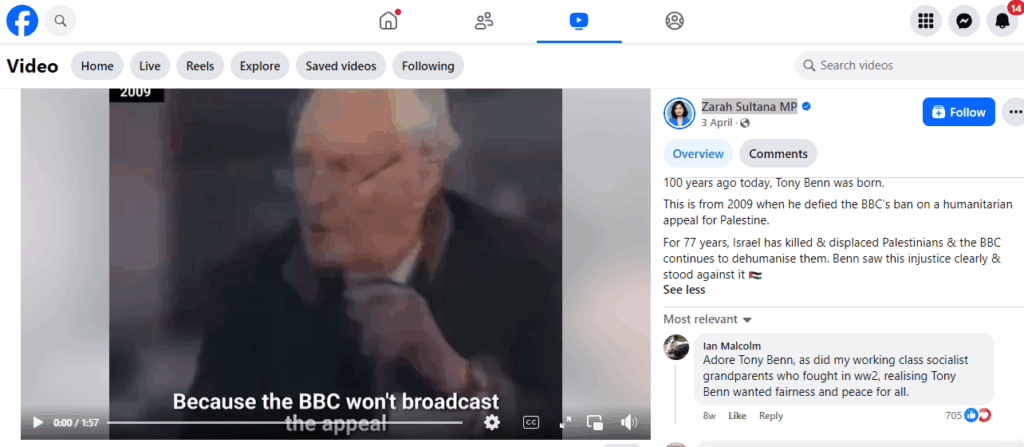
The BBC’s censorship of voices speaking out against Israel’s war on Gaza—and in support of Palestinian liberation—is nothing new. Back in 2009, the late British politician Tony Benn publicly condemned the BBC for refusing to air a humanitarian appeal for Gaza following one of Israel’s deadly assaults.
In a live interview with the BBC, Benn was explicitly told not to mention the appeal. He refused. On air, he called out the broadcaster’s decision, stating bluntly: “Let’s be clear, the reason the BBC hasn’t done it is because the Israelis objected.”
That clip, once available on YouTube, has since been removed. In its place is a notice: “This video contains content from BBC Studios, who has blocked it on copyright grounds.”
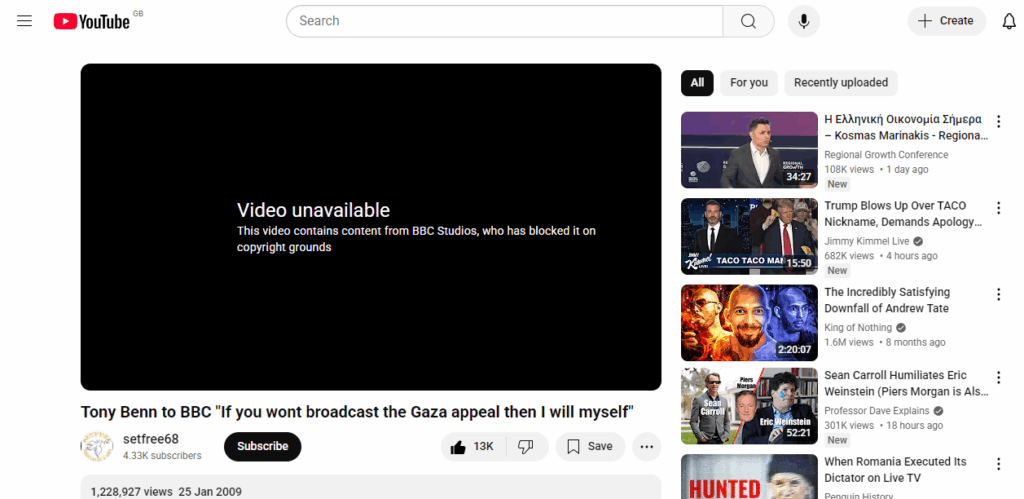
So while the BBC continues to amplify Israeli and Zionist narratives, it is also reaching back in time to erase dissent—even the principled stand of one of Britain’s most respected parliamentarians.
But it’s mistaken if it thinks it can silence the world. The task is too vast, and information now too fluid, for such control to succeed. Copies of the clip are circulating on Facebook , X (formerly Twitter), and elsewhere. Many have already seen it. It will not disappear.
The BBC should have learned from Herostratus: some names—and some acts of defiance—cannot be erased.